
Exhaust Fittings & Silencers for Pneumatic Valves
Reduce Noise, Protect Valves, Improve Workplace Safety
Exhaust fittings also called silencers or mufflers—are installed on the exhaust ports of solenoid valves, cylinders, and manifolds to reduce noise, filter particulates, and control back pressure.
At ATS Pneumatics Ltd, we stock one of Christchurch’s largest ranges of pneumatic exhaust fittings, ready for fast NZ-wide delivery or pickup from our Hornby warehouse.
Why Use Exhaust Fittings?
Noise reduction: Cut dB levels at the valve exhaust to meet Health and Safety requirments.
Component protection: Porous media traps contamination and helps keep debris out of the system.
Flow tuning: Choose the correct size to avoid back pressure that can slow actuators.
Quick retrofit: Threads straight onto valve exhaust ports (BSP/BSPT).
Our Range
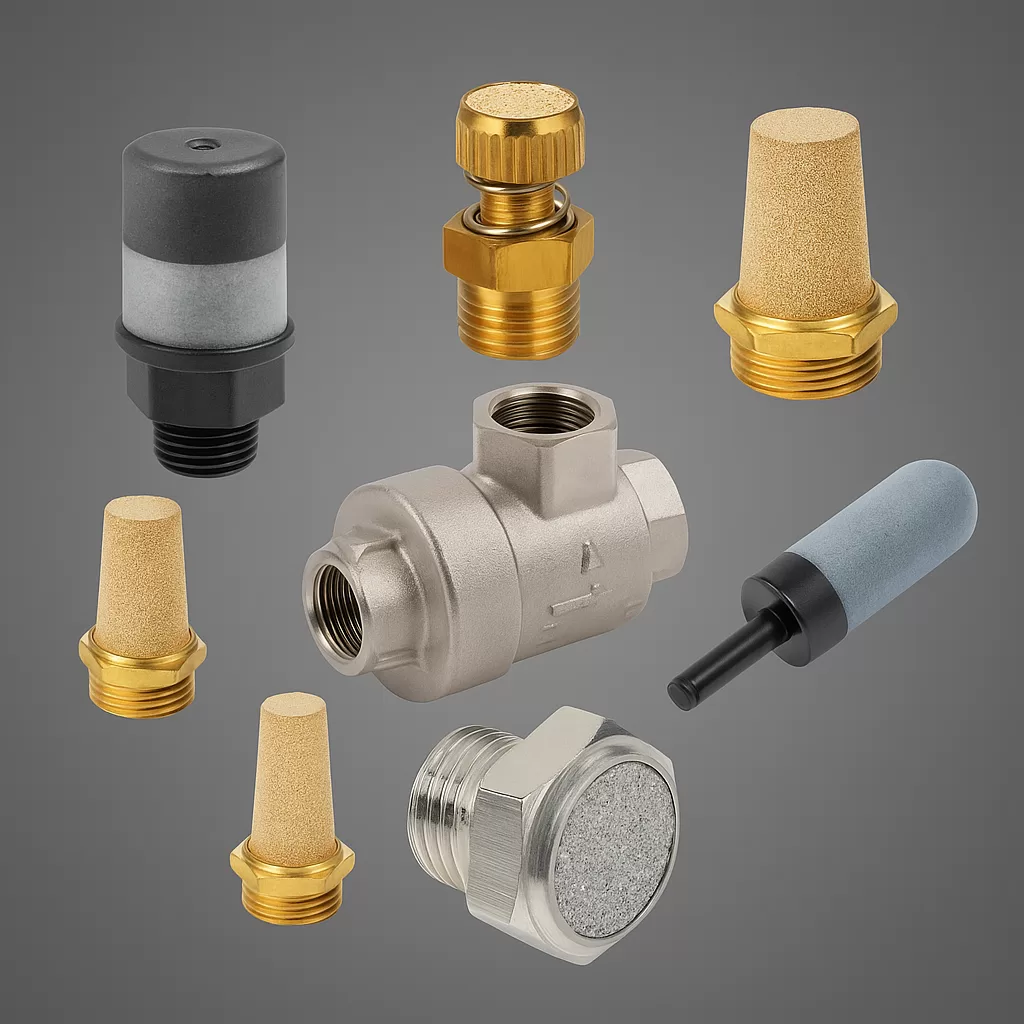
We carry options to suit workshop and industrial environments:
Sintered Bronze Silencers (Standard):
Cost-effective noise reduction with porous bronze media. Ideal for general compressed-air valves.Plastic Silencers:
Lightweight, economical noise control for light-duty applications.- Stem Silencers: for quick connection to push fit fittings.
High-Flow / Low Back-Pressure Silencers:
Optimised internal design for tools and actuators that need maximum exhaust flow.Adjustable Needle Silencers (Exhaust Throttle):
Combine muffling with a fine needle adjustment to tune exhaust speed (and therefore cylinder speed) at the valve.
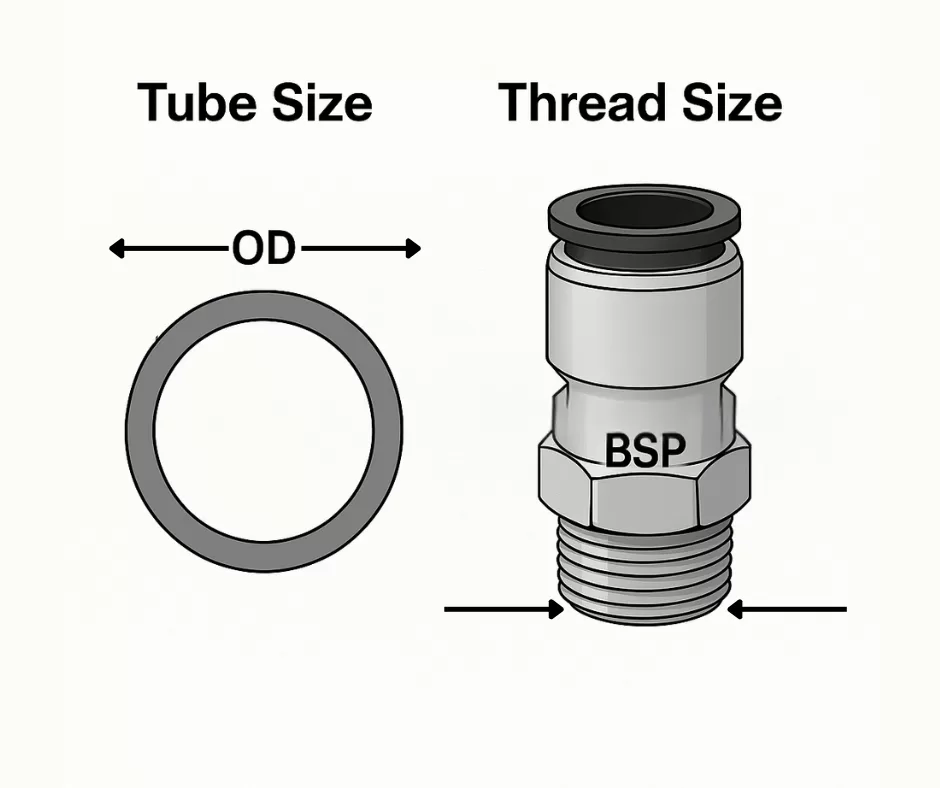
Common threads: M5, 1/8″, 1/4″, 3/8″, 1/2″, 3/4″, 1″
Typical materials: sintered bronze, nickel-plated brass, engineering plastics.
How to Select the Right Exhaust Fitting
Match the thread: Check your valve’s exhaust port (e.g., 1/4″ BSP).
Size for flow: Choose a silencer with equal or higher flow/Cv than the valve to avoid back pressure and slow returns.
Pick the media & body: Sintered bronze / nickel-plated brass for general industry or Plastic for light-duty and low cost.
Consider adjustability: Use adjustable needle silencers if you want to tune actuator speed at the exhaust.
Environment matters: For dusty areas, select designs that are easy to clean or replace; for tight spaces, consider using a right-angle adaptor.
Not sure which to choose? Call our team and we’ll match the correct silencer to your valve and duty.
Installation & Maintenance Tips
Do not overtighten. Use thread tape/paste suitable for compressed air.
Keep exhaust paths clear. Replace clogged silencers—rising back pressure is a sign.
Service intervals. In dusty/oily environments, check silencers during routine maintenance; swap out when visibly darkened or if cycle speed drops.
Safety first. Vent systems before removal; consider safety-venting couplers in adjacent lines.